Initiate, Develop & Expand business through us

Please wait...
Initiate, Develop & Expand business through us
Nanoceramics are a special type of ceramics that are produced using nanotechnology. Nanoceramics are inorganic, heat-resistant and corrosion-resistant. They have widespread applications in the biomedical field. One main example where nanoceramics are used is in dentistry. These nanoceramics are used to repair and replace tissues in dentistry. Nanoceramics are unique as they combine strength and bioactivity. One of the most widely used nanoceramics is hydroxyapatite (HAP) or nano hydroxyapatite. Nanotechnology has been a boon for bone replacement applications by introducing new technologies which can help to produce bone-like synthetic nanopowders and coatings of hydroxyapatite.
The human bone is a modified version of hydroxyapatite, and hence it has wide applications in bone tissue engineering. HAP is spun into fibres by electrospinning and is engineered with a polymer to form scaffolds for bone tissue engineering. One important area where HAP could be potentially used is in the treatment of metallosis. Metallosis is a condition caused by the deposition of metallic particles from prosthetics and causes cell/tissue death, pain, discomfort to the patient, and implant rejection. The deposition of metal ions from prosthetics and implants can be prevented by a coating of HAP.
Hydroxyapatite is biocompatible, hence it does not induce any kind of immune response and also acts as protection against metal ions. A composite scaffold combining PLGA-HAP (poly D, L- lactic-co-glycolic acid and nano-hydroxyapatite) has been recently developed for bone regeneration. Another application of bone of HAP is that it is used in the form of bioactive porous beads. These beads induce the formation of bone cells and hence lead to bone regeneration. Nanoceramics can be used for treating various kinds of bone defects such as osteoporosis, osteomyelitis and other bone or dental trauma. HAP is one of the most important materials that is revolutionising the area of bone tissue engineering.
Keywords: Nanoparticles, Hydroxyapatite, Tissue engineering, Bone tissue, Scaffolds, Metallosis
Image source:
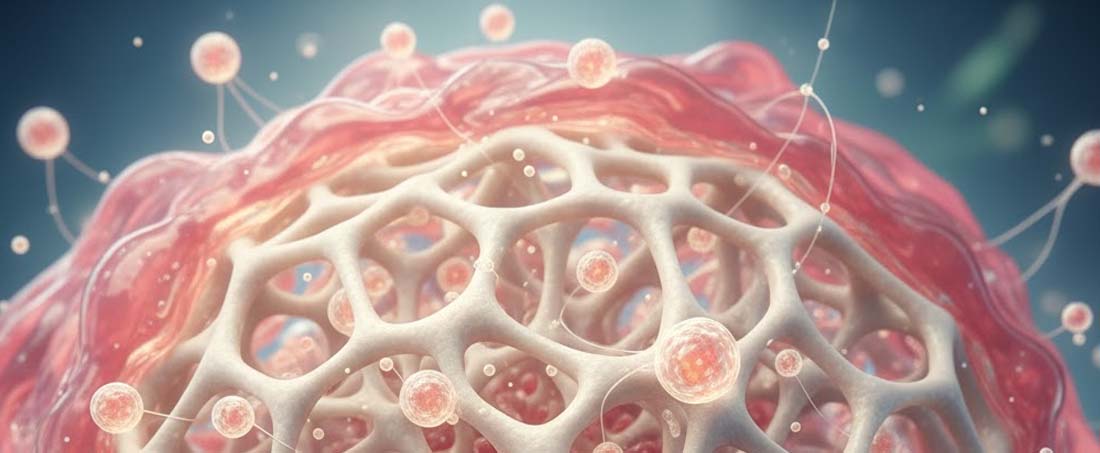
Image generated using Google Gemini (AI).
Citation:
Jayasri R. Hydroxyapatite nanoceramics for bone tissue engineering. The Torch. 2023. 4 (48).
Available from: https://www.styvalley.com/pub/magazines/torch/read/hydroxyapatite-nanoceramics-for-bone-tissue-engineering/.
Article counter:
The article has been read 166 time(s)