Initiate, Develop & Expand business through us

Please wait...
Initiate, Develop & Expand business through us
Diabetes mellitus is a metabolic disorder with a massive prevalence. It is estimated that over 537 million adults lived with diabetes in the year 2021. It is projected that by 2045, 783 million people will be living with the disease. The sheer ubiquity of diabetes has made it the epidemic of this century. Type 1 diabetes mellitus (T1DM), which consists of 5~10% of the total diabetic population, is a T-cell-mediated autoimmune disorder that leads to the destruction of insulin-secreting pancreatic β-cells that ultimately results in lowered insulin production, leading to high blood glucose levels called hyperglycemia.
Conventional treatment strategies for T1DM include insulin injections and are proven to be effective in ameliorating hyperglycemia, but are inept at regenerating β-cells or alleviating autoimmunity. Another technique, such as islet transplantation, despite being capable of treating T1DM efficiently, shows certain limitations, such as the use of large amounts of immunosuppressive doses during transplantation, which causes various adverse side effects, including inflammatory reactions in the blood circulation and has a high cost. The decline of the islet transplant technique resulted in the emergence of mesenchymal stem cell therapy.
Mesenchymal stem cells (MSCs) are an excellent therapeutic option for T1DM as they possess immunomodulatory properties and can differentiate into insulin-secreting β cells (in vitro). In addition, pluripotent MSCs in adults' bone marrow (BM) are an appealing alternative source of stem cells for the regeneration of β-cells. Insulin-producing cells (IPCs) can be produced from BM-MSCs through a specific 18-day, three-stage protocol. The first stage involves culturing the cells in serum-free high glucose & β-mercaptoethanol. In stage two, the cells are cultured in a medium containing non-essential amino acids, β-fibroblast growth factor, epidermal growth factor, and L—glutamine. Finally, in the third stage, the cells are cultured in nicotinamide, activin A and β-cellulin. At the end of the culture period, the differentiated cells that resemble pancreatic islet cells are generated, which produce insulin in response to glucose.
Similarly, when the streptozotocin-induced non-obese diabetic (NOD) or severe combined immunodeficient (SCID) mice are transplanted with BM-MSCs through the intracardiac infusion, a large amount of β-cells production is observed, accompanied by a higher level of insulin, resulting in a lower blood sugar level as compared to non-transplanted diabetic mice. Undeniably, mesenchymal stem cells are a novel gene-therapy strategy to prevent type-1 diabetes. Therefore, bone marrow-derived MSCs have more substantial benefits than standard therapeutic techniques and can be a powerful tool in treating diabetes.
Keywords: Mesenchymal stem cells, Stem cell therapy, Bone marrow, Type 1 diabetes, Insulin-producing cells, β-cells, Pluripotency, Hyperglycemia
Image source:
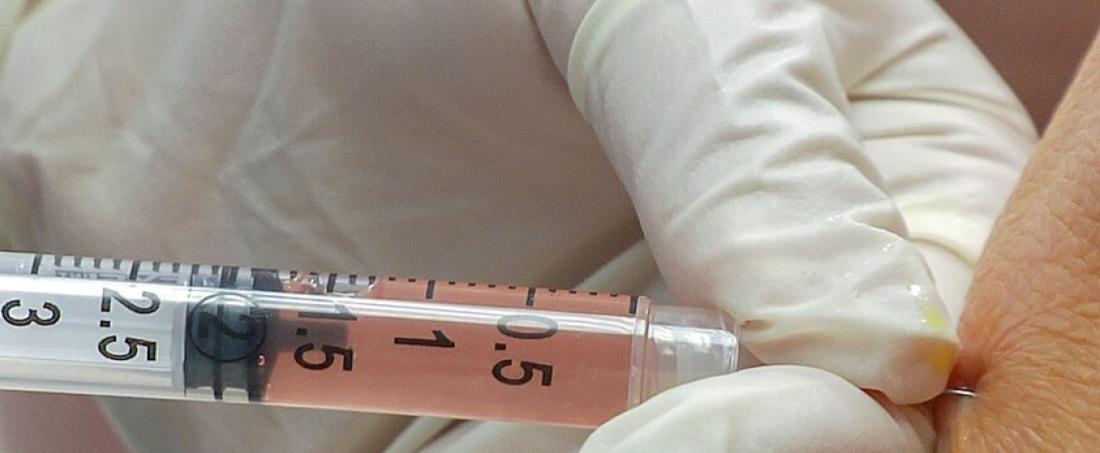
Stem-cell-injection-knee-ama-regenerative-medicine by Alice Pien, MD, available under Creative Commons Attribution-Share Alike 4.0 International, at https://commons.wikimedia.org/wiki/File:Stem-cell-injection-knee-ama-regenerative-medicine.jpg
Citation:
Padmashree V. Mesenchymal Stem cell therapy for Type 1 Diabetes. The Torch. 2023. 4 (51).
Available from: https://www.styvalley.com/pub/magazines/torch/read/mesenchymal-stem-cell-therapy-for-type-1-diabetes/.
Article counter:
The article has been read 11 time(s)