Initiate, Develop & Expand business through us

Please wait...
Initiate, Develop & Expand business through us
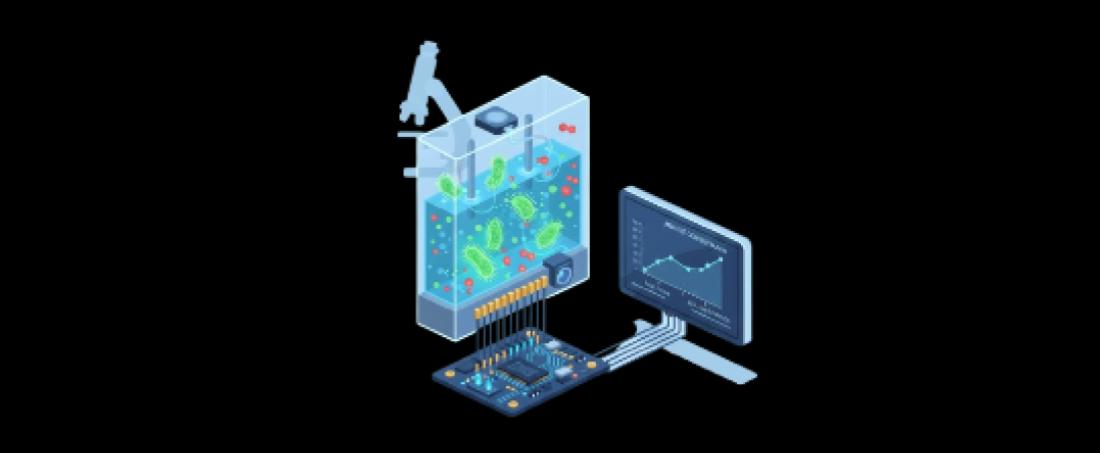
A microbial biosensor is an analytical instrument that combines microorganisms with a transducer to detect target analyses in applications as diverse as medicine, environmental monitoring, defence, food processing and safety. The transducer in a microbial biosensor helps generate a measurable signal proportional to the concentration of the analyte. Earlier microbial biosensors employed the microorganisms with respiratory and metabolic capabilities to detect a material that is either a substrate or an inhibitor of these processes.
The recent outbreak of the COVID-19 pandemic highlighted the existence of coronavirus along with diverse respiratory viruses. The pandemic increased the research on emerging viruses and techniques to combat them. The ability to identify the virus with high specificity and sensitivity is critical for correct diagnosis. A low-cost biosensor for in situ detection provides a quick and dependable option. A design can be made for virus detection on the surface of the objects. This will have great benefits for overcoming the widespread of the virus-causing disease in future. For this, the basic requirement is to have the genetic material of the virus that will help to detect it on the surfaces around us.
Biosensors help to detect the biomolecules associated with diseases, such as cells, proteins, and nucleic acids. Then a biomimetic component is mounted over a transducer and interacts with the analyte in the solution, resulting in a biological reaction. The transducer will then turn this biological reaction into a measurable signal, which the digital detector module measures. Along with this, with the help of R and Python programming, an app or software can be developed to visualise and analyse the data, which might help for further research studies as well as efficient presentation and cure.
Viral respiratory diseases are a public health concern, with over a million new cases and hundreds of fatalities recorded each year. Furthermore, viruses may develop over time, and people are constantly vulnerable to new lethal variants, as seen in the recent COVID outbreak. The existing scenario relies on precise diagnosis, but it is time-consuming and expensive, with the risk of false-positive and false-negative results, and it is not available to the entire community. However, biosensors meet these requirements and have been created for a variety of applications, including clinical diagnostic purposes such as detecting markers or biomarkers for cardiovascular diseases, cancer, bacteria, viruses, fungi infections.
Keywords: Biosensor, Microbial detection, Transducer, R-Python, Instrument
Image source:
Image generated using Google Gemini (AI).
Citation:
Riddhi Upadhyay . Revolutionising surface detection using microbial biosensors. The Torch. 2023. 4 (50).
Available from: https://www.styvalley.com/pub/magazines/torch/read/revolutionising-surface-detection-using-microbial-biosensors/.
Article counter:
The article has been read 12 time(s)