Initiate, Develop & Expand business through us

Please wait...
Initiate, Develop & Expand business through us
3D cultured organoids open a promising chapter to cure cystic fibrosis. Cystic fibrosis (CF) is a multiorgan system failure disease. CF is mainly caused by mutations in the cystic fibrosis transmembrane conductance regulator (CFTR) gene, which regulates salt balance inside and outside the cell. CFTR protein deficiency causes a dehydrated surface liquid and impaired conciliary clearance in cystic fibrosis (CF) patients' lungs. There are six different types of cystic fibrosis depending on CFTR mutations.
The discovery of 3D cultures or organoids is the key to understanding and treating various diseases. Now, 3D cultures have shown to be very effective in identifying the key pathways and mutations that cause cystic fibrosis. 3D cultures are a relatively new field that involves culturing undifferentiated cells known as stem cells, which will imitate a human organ, hence the name organoid. These stem cells are classified into two types: pluripotent stem cells (PSCs) and adult stem cells (ASCs). Pluripotent stem cells have the unique ability to renew themselves and differentiate into various cell types and tissues within the body. On the other hand, adult stem cells can also renew themselves, but their differentiation potential is more limited compared to pluripotent stem cells.
A patient with cystic fibrosis (CF) was treated for the first time in early 2015 using data from drug screening tests performed on the patient's tissue, which was cultured ex vivo in the form of organoids. Airway organoids, intestinal organoids and lung organoids are three different types of organoids that are mostly used to find new treatments for CF. Airway organoids can be generated from PSCs or ASCs and are a better tool to conduct and test drugs for cystic fibrosis. In established protocols, induced pluripotent stem cells (iPSC)-derived airway basal cells can be efficiently cryopreserved for long-term storage while maintaining their ability to form CFTR-expressing airway epithelium, which makes it possible to create biobanks of CF iPSCs from people with class I mutations who cannot be treated with small molecules.
Class I mutations include premature termination codons (PTC) or nonsense codons, which result in the reduction of CFTR expression. A nonsense mutation is a point mutation in a DNA sequence which results in a short or incomplete protein product. When it comes to treating CF, intestinal organoids are the most effective because data show that drugs are effective even on rare CF mutations. Rectal biopsies are an appealing cellular source for investigating CFTR function due to the abundance of CFTR expression in the distal colon. Similar to intestinal organoids, lung organoids also prove effective in understanding CF because, in cystic fibrosis patients, cells in the respiratory system, notably the lungs, absorb too much salt and water due to a malfunctioning electrolyte transport mechanism. Organoids have shown considerable promise in the treatment of cystic fibrosis throughout the years.
Researchers were able to decipher the pathologies that cause cystic fibrosis and identified important modulators that can help the CFTR gene function better. The field of 3D culture is still developing, and scientists are learning how to use organoids to comprehend and develop new medicines, which offers high hopes for the future.
Keywords: Cystic fibrosis, Organoids, 3D cultures, Cystic fibrosis transmembrane conductance regulator (CFTR), Stem cells
Image source:
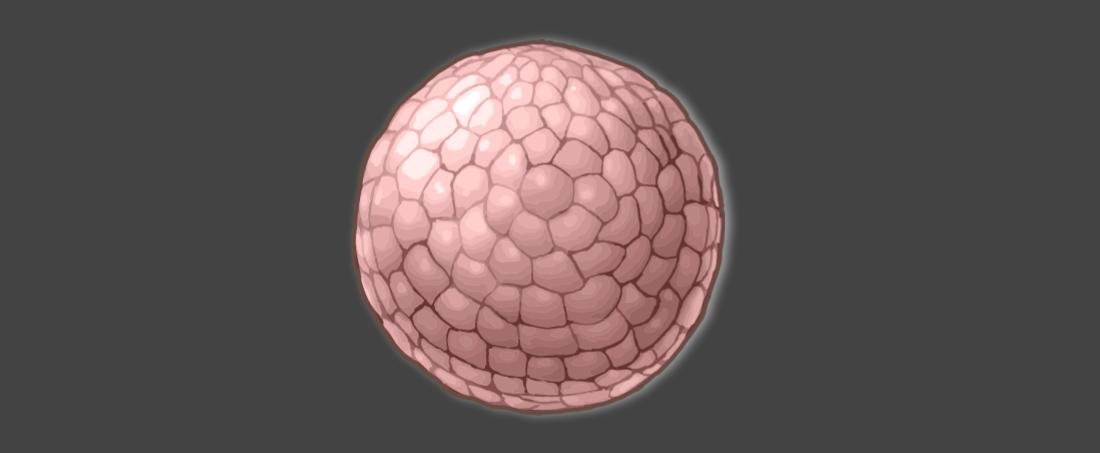
Organoid (NIH BioArt 399) by National Institutes of Health (NIH), available under Creative Commons Attribution-Share Alike 3.0 Unported, at https://commons.wikimedia.org/wiki/File:Organoid_(NIH_BioArt_399_-_633184).svg
Citation:
Najwa Zahi. The revolutionary role of organoids in curing cystic fibrosis. The Torch. 2023. 4 (49).
Available from: https://www.styvalley.com/pub/magazines/torch/read/the-revolutionary-role-of-organoids-in-curing-cystic-fibrosis/.
Article counter:
The article has been read 10 time(s)