Initiate, Develop & Expand business through us

Please wait...
Initiate, Develop & Expand business through us
Worldwide, breast cancer affects more women than any other type of cancer. Triple-negative breast cancer (TNBC) is a recently discovered subtype of breast cancer which is accountable for more than 15-20% of all breast cancers, with poor survival rates. The incidence of TNBC is highest in premenopausal women under 40. A characteristic feature of TNBC is aggressive tumour behaviour and poor prognosis, which results in the recurrent behaviour of the disease even after the proper treatment and distant metastasis to vital organs such as lungs, kidneys or brain more often compared to non-TNBC patients. Distant metastases typically manifest in the third year following diagnosis.
Non-TNBC patients experience a recurrence between 35 and 67 months after treatment begins, while TNBC patients experience a recurrence between 19 and 40 months. The highest mortality rate of 40% of TNBC patients, as compared to the other non-TNBC patients, is attributed to the fact that TNBC lacks certain important receptors, which act as markers to diagnose breast cancer and assist in effective treatment. These marker receptors are progesterone receptor (PR), oestrogen receptor (ER) and human epidermal growth factor receptor 2 (HER2). Therefore, depending upon the genetic expression of the cells, TNBC is divided into subtypes,s including basal-like 1, basal-like 2, mesenchymal, mesenchymal stem-like, immunomodulatory, luminal androgen receptor, and unspecified tumours (UNS).
Due to its molecular makeup, endocrine treatment and molecular targeted therapy are unsuccessful. Chemotherapy is, therefore, the primary systemic treatment; adjuvant chemoradiation given after surgery is ineffective. Bevacizumab injections have been administered in combination with chemotherapeutic drugs to treat TNBC in some centres; however, this approach has not significantly improved patient survival. Thus, new treatment plans and objectives are urgently needed. A basic understanding of the molecular mechanics of TNBC and its subtypes will help develop novel targeted therapeutic techniques for curing the disease.
Keywords: Triple-negative breast cancer, Breast cancer, TNBC subtypes, Oestrogen receptor
Image source:
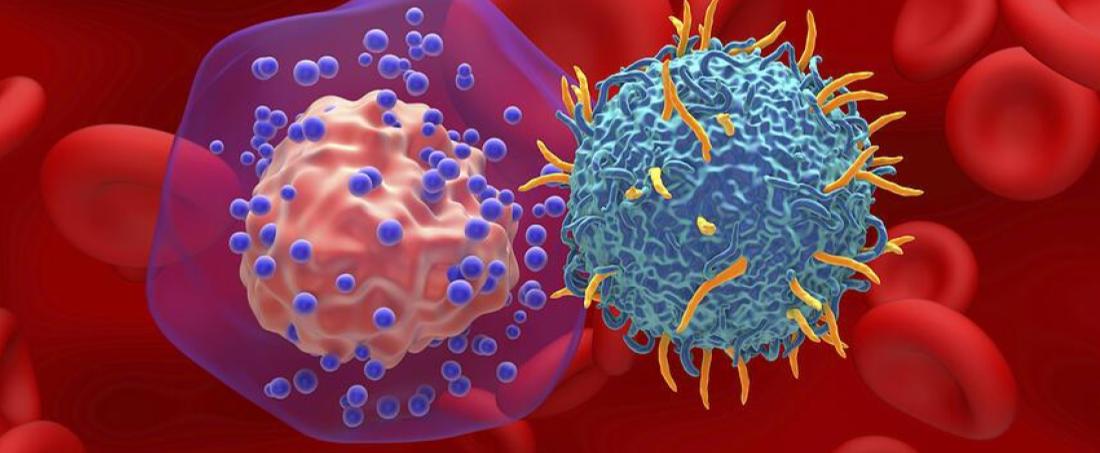
CAR-T cell therapy in triple-negative breast cancer illustration by Nemes Laszlo / Science Photo Library, available under Royalty-free license, at https://photos.com/featured/car-t-cell-therapy-in-triple-negative-breast-cancer-illustration-nemes-laszloscience-photo-library.html
Citation:
Chandiri Gunasree. Prevalence of aggressive triple-negative breast cancer and the biology of the disease. The Torch. 2023. 4 (52).
Available from: https://www.styvalley.com/pub/magazines/torch/read/prevalence-of-aggressive-triple-negative-breast-cancer-and-the-biology-of-the-disease/.
Article counter:
The article has been read 9 time(s)